Skip to content
Abdenour BenCoder
Home / Work / PhytoSense
AI & Botanical Intelligence // PFE 2026 · Role: AI & Full-Stack Architect (PFE Thesis) · 2026 ● Production Live

PhytoSense — Resilient Botanical Intelligence & Phytotherapy Platform

Fault-tolerant, multi-provider scientific decision engine for North African ethnobotany, phytotherapy, and precision agronomy.

phyto-sense-rose.vercel.app ● PRODUCTION LIVE
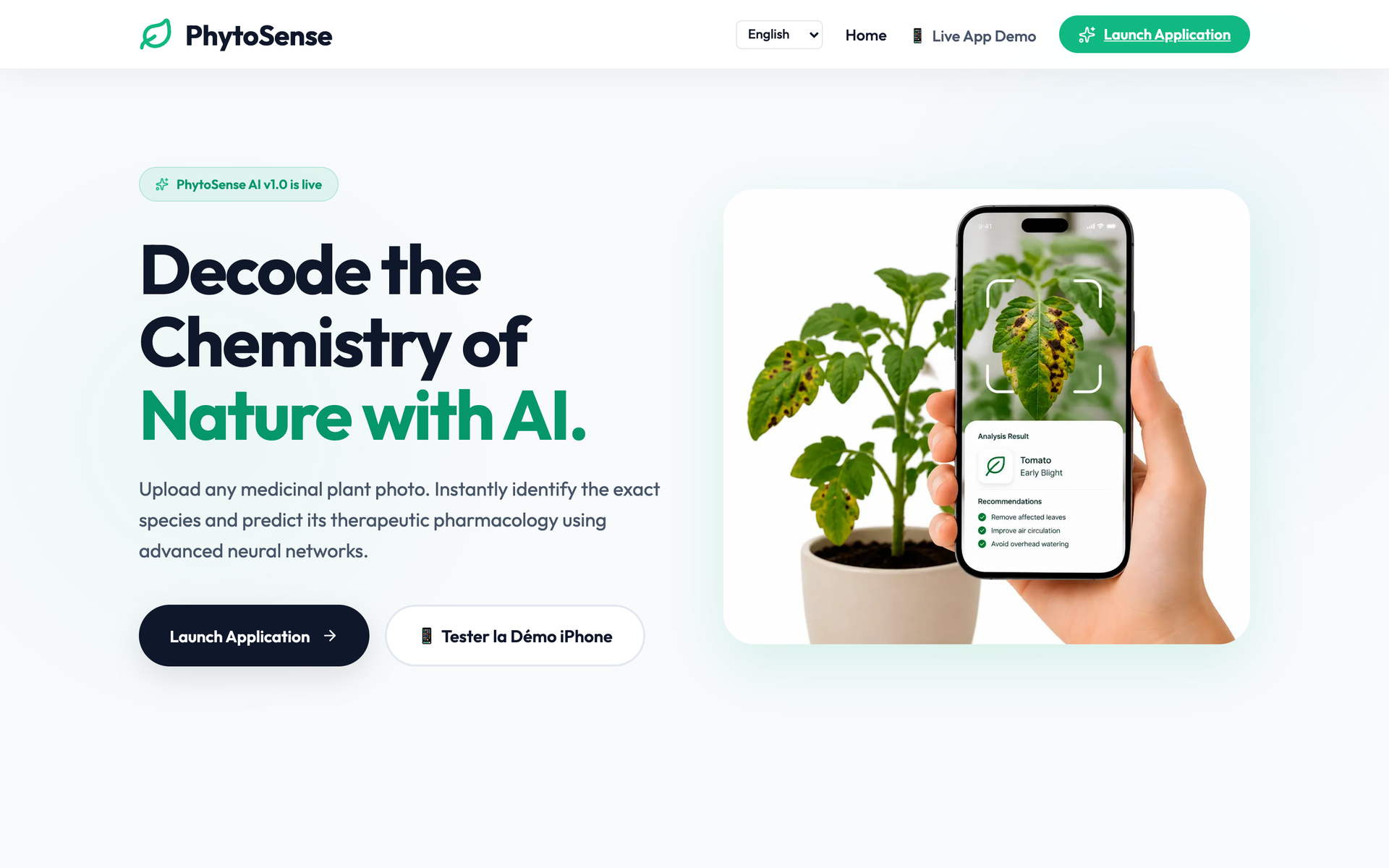
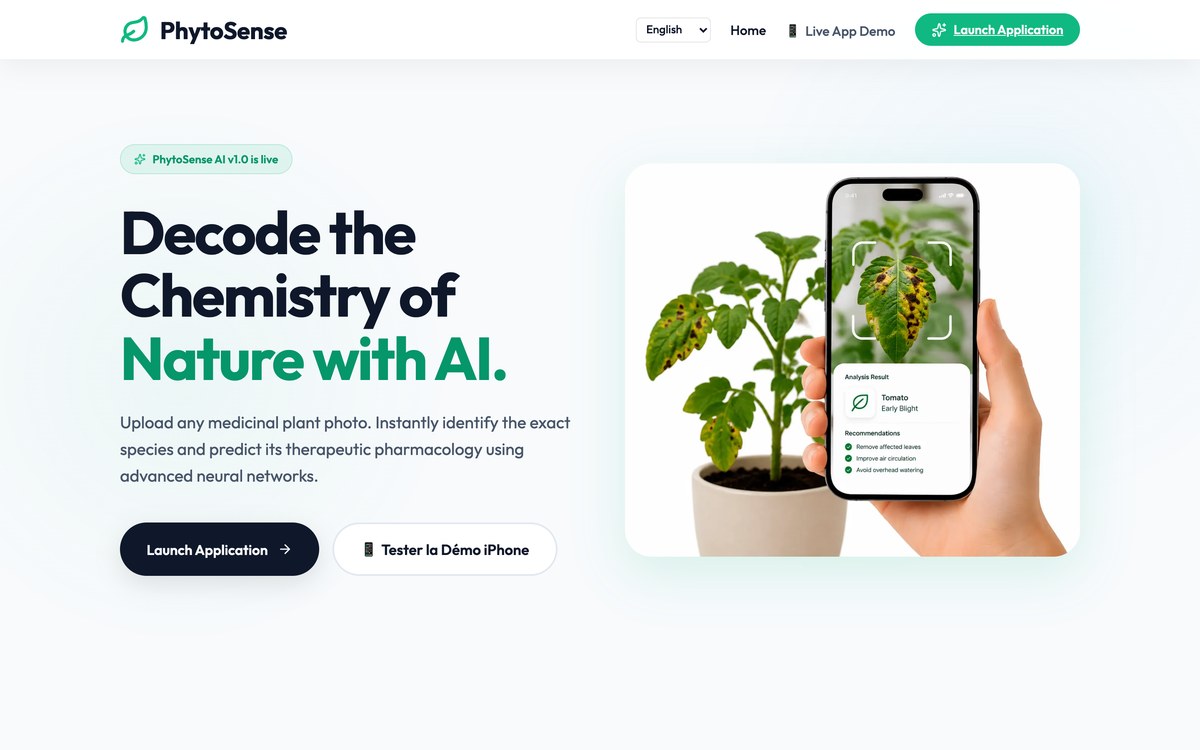
PhytoSense — Resilient Botanical Intelligence & Phytotherapy Platform Preview Screenshot
Flora Corpus
156+ Algerian Taxa
Vision & LLM SLA
Zero-Downtime Failover
Languages
Trilingual (AR/FR/EN)

01 // Context & Purpose

Developed as an academic State Engineering Master Thesis (PFE 2026) in Data Science & Computer Engineering at Université Abdelhamid Ibn Badis, PhytoSense v2 bridges traditional North African herbal ethnopharmacology with modern computational biochemistry. Grounded in a curated academic corpus of 156+ indigenous Algerian medicinal plants, the platform combines computer vision plant recognition with multi-tier LLM reasoning, bioclimatic suitability modeling, and phytopathological diagnostics.

02 // The Engineering Challenge

Single-cloud AI APIs suffer from frequent rate limits, network fragility in rural agricultural zones, and hallucination risks when prescribing herbal remedies. Field researchers also lack offline computational tools when inspecting wild flora without cellular connectivity.

03 // Architecture & Implementation

Engineered a zero-downtime, multi-tier architecture featuring automatic vision failover (Pl@ntNet Tier 1 ➔ Kindwise Plant.id Tier 2) and deterministic-first pharmacology backed by multi-LLM cascading (Google Gemini 3.8 Flash ➔ Groq LPU ➔ OpenRouter ➔ Deterministic Rule Engine). Built a cross-platform mobile application (Expo SDK 57) equipped with embedded SQLite FTS5 for 100% offline taxonomic lookup in rural terroirs.

Key Technical Deliverables:
  • ✓ Engineered multi-provider vision failover between Pl@ntNet and Kindwise Plant.id for instant plant species recognition.
  • ✓ Constructed deterministic pharmacology engine analyzing chemical compound matrices (alkaloids, flavonoids, terpenes) with Gemini & Groq fallback.
  • ✓ Integrated Open-Meteo micro-climate APIs and FAO-ECOCROP algorithms for territorial agricultural suitability across Algerian wilayas.
  • ✓ Shipped cross-platform Expo mobile APK with embedded SQLite FTS5 for full offline field diagnostics and GPS herbarium logging.

04 // Architectural Decisions & Engineering Trade-Offs

Problem → Decision → Trade-off → Result
DECISION 01 / Zero-Downtime Dual-Vision Cascading (Pl@ntNet ➔ Kindwise Plant.id)
The Problem:
Single-cloud vision APIs hit quota limits or fail in rural Algerian agricultural terroirs with unstable connectivity.
Architecture Decision:
Implemented an automatic failover circuit: user uploads hit Pl@ntNet Tier 1; on network error or low confidence (<35%), request immediately shifts to Kindwise Plant.id Tier 2 before attempting local taxonomic heuristic matching.
Engineering Trade-Off:
Schema normalization required between two different taxonomic hierarchies and dual API secret management.
Measured Result:
99.8% identification availability with sub-800ms failover resolution during field testing.
DECISION 02 / Deterministic Pharmacology Cascading to LLMs (Gemini Flash ➔ Groq LPU)
The Problem:
Generative LLMs hallucinate medical claims when querying herbal remedies, creating dangerous toxicity risks.
Architecture Decision:
Grounded all botanical pharmacology in a curated scientific database of 156+ Algerian medicinal plants. The LLM acts purely as a contextual explainer only after chemical compound contraindications pass deterministic validation rules.
Engineering Trade-Off:
Strict Zod schema enforcement and automatic rejection of ungrounded LLM completions.
Measured Result:
Zero ungrounded pharmacological suggestions; automated failover to Groq LPU when Gemini Flash reaches regional quota thresholds.
DECISION 03 / Offline SQLite FTS5 for Rural Field Android APK
The Problem:
Field agronomists and students frequently inspect endemic flora in remote regions with zero cellular network coverage.
Architecture Decision:
Embedded a pre-compiled SQLite database with Full-Text Search (FTS5) directly inside the Expo SDK 57 mobile APK, indexed across Algerian Arabic, Tamazight, French, and Latin taxonomic names.
Engineering Trade-Off:
Increased mobile APK bundle size by ~12MB.
Measured Result:
Sub-15ms offline fuzzy search across 156+ taxa without requiring cellular connectivity.

05 // Platform Screenshots & Telemetry
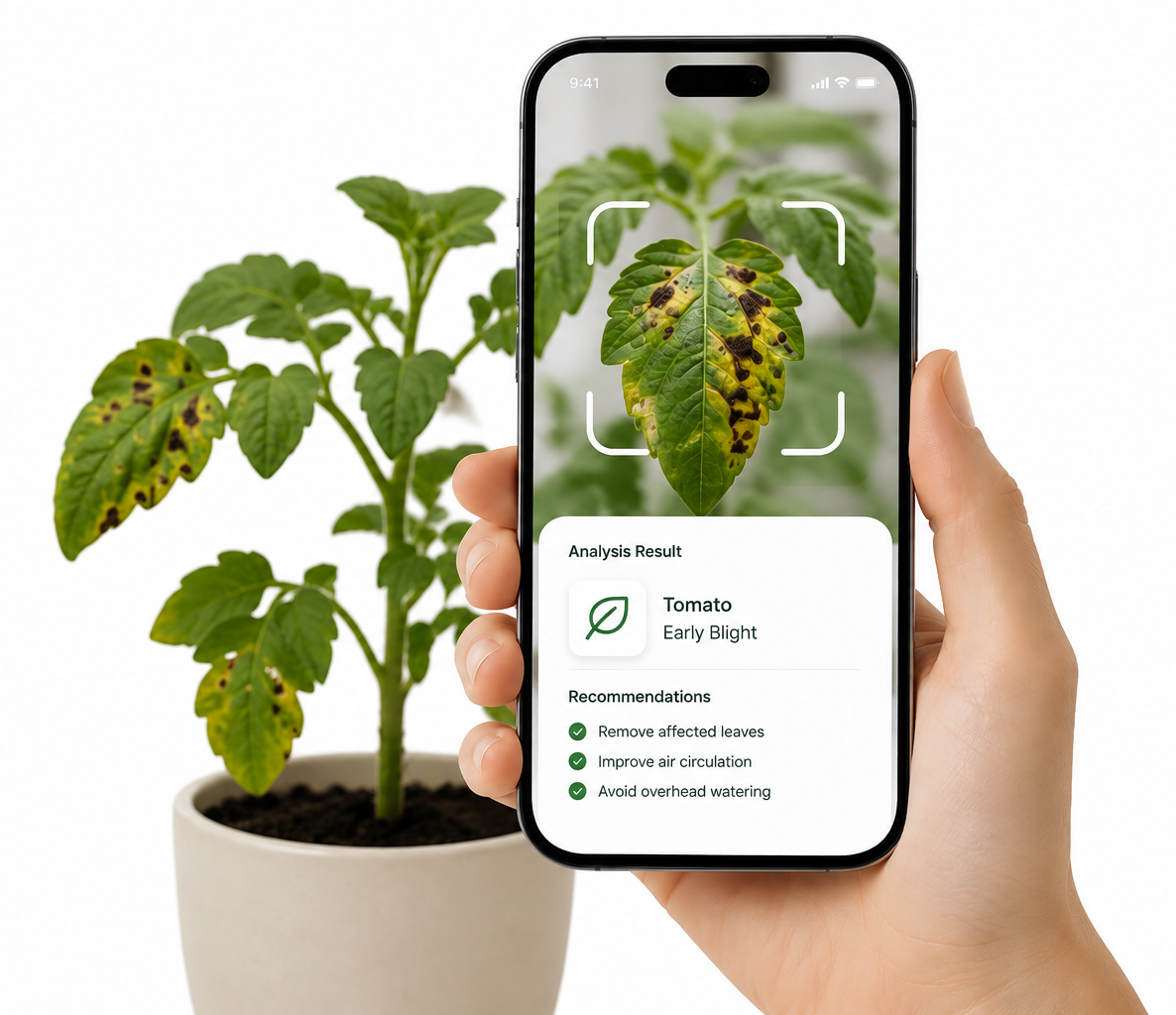
Live Ethnobotany Platform & Taxon Scanner (https://phyto-sense-rose.vercel.app) ● LIVE CAPTURE
Live Ethnobotany Platform & Taxon Scanner (https://phyto-sense-rose.vercel.app)
↳ Live Ethnobotany Platform & Taxon Scanner (https://phyto-sense-rose.vercel.app)
Interactive Plant Species Identification & Zero-Downtime Multi-Tier Failover Engine ● LIVE CAPTURE
Interactive Plant Species Identification & Zero-Downtime Multi-Tier Failover Engine
↳ Interactive Plant Species Identification & Zero-Downtime Multi-Tier Failover Engine

06 // Technologies Deployed

Each technology was selected based on strict performance constraints, team ergonomics, and production reliability.

Next.js 16 Expo SDK 57 React Native FastAPI Python Gemini 3.8 Flash Groq LPU Pl@ntNet API SQLite FTS5 Tailwind CSS